


When Wedding Ceremonies Change, What Remains?Reflections from a Print Shop and a Novel
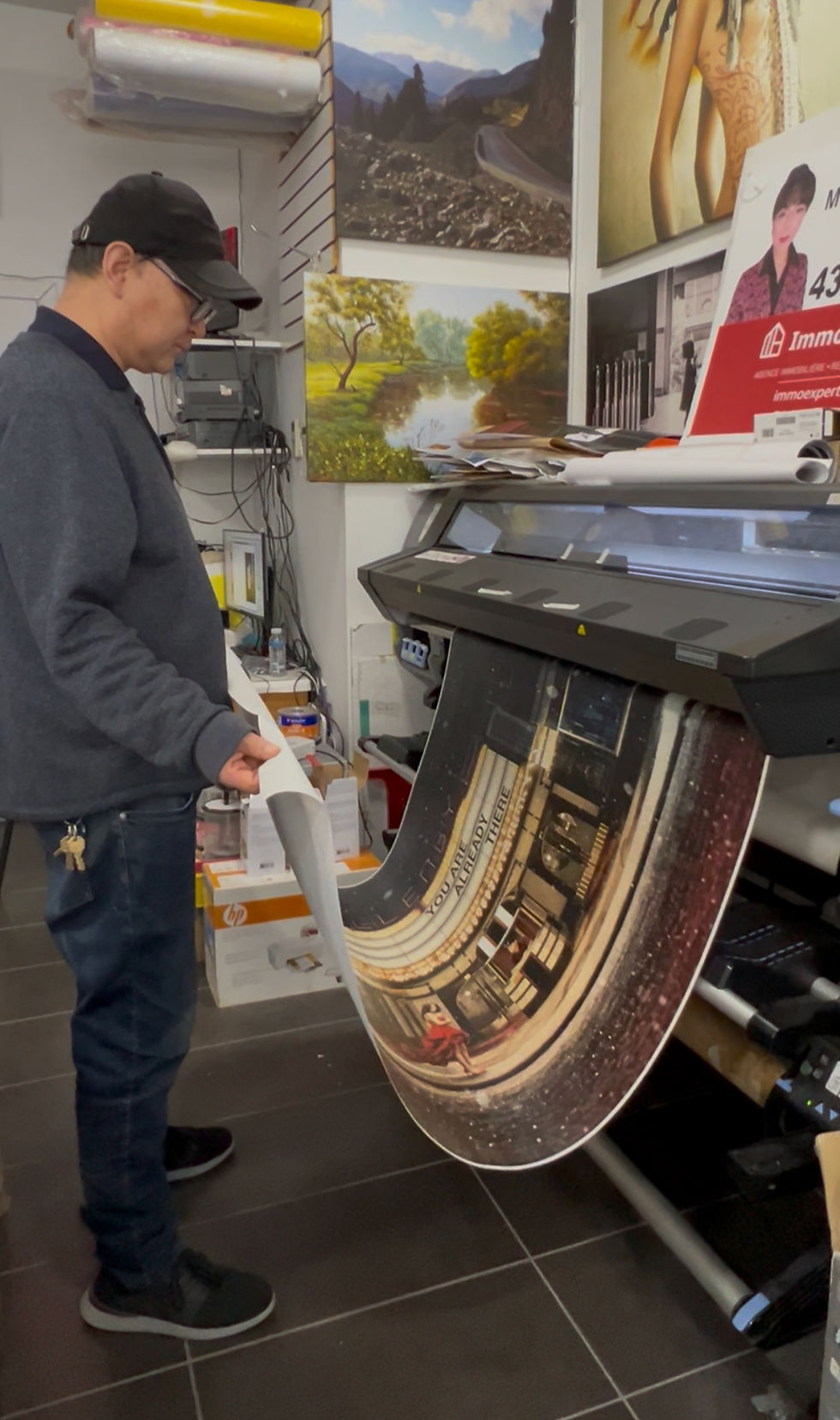
For more than thirteen years, I have owned a small print shop in Montreal.
Every wedding season, couples come to ACCO PHOTO with their happiest memories.
We print wedding photographs.
We enlarge portraits onto canvas.
We frame family pictures.
We produce welcome signs, seating charts, menus, table numbers, and ceremony backdrops.
Sometimes we even become a tiny part of a wedding before it begins.
Watching so many weddings over the years has led me to ask a simple question:
Is the wedding ceremony itself still as important as it once was?
I don't think weddings are disappearing.
People will probably continue getting married for a very long time.
But I do wonder whether the ceremony is gradually changing its role.
Historically, marriage ceremonies were much more than personal celebrations.
In tribal societies, they publicly announced that two people—and often two families or clans—now belonged together.
In agricultural societies, weddings became major community events.
They marked alliances, inheritance, land, kinship, and shared identity.
The entire village often witnessed the union.
Industrial society changed much of that.
Governments now register marriages.
Legal systems protect inheritance.
Banks, insurance companies, and public institutions recognize relationships through documents rather than public ceremonies.
Many of the practical functions once performed by weddings have quietly moved elsewhere.
Perhaps that is why modern weddings increasingly become experiences rather than necessities.
Ironically, my own novel, Nonimportantech, reflects this transformation.
Several couples decide to organize a collective wedding.
Instead of treating the ceremony as a once-in-a-lifetime spectacle, they approach it almost like a collaborative project.
Professional planners coordinate the logistics.
Schedules are optimized.
Resources are shared.
The ceremony becomes remarkably efficient.
Very industrial.
Yet something interesting happens.
Although the organization becomes more modern, the celebration itself returns to a farm.
The bride comes from Omar's family, whose roots reach back to a nomadic culture.
The wedding reception takes place on the farm of Jean-Pierre and Sylvie.
Looking back, I realize this journey feels symbolic.
From nomadic traditions...
to agricultural land...
through industrial organization...
all the way into an AI-driven future.
The ceremony moves forward in time while quietly returning to the earth.
Perhaps what truly matters has never been the ceremony itself.
At ACCO PHOTO, I often print wedding photographs years after the celebration.
Sometimes couples return with children.
Sometimes they ask us to frame the same wedding portrait that has been stored in a closet for years.
What touches me most is not the wedding day.
It is everything that happened afterward.
The family they built.
The friendships they kept.
The life they continued to create together.
Maybe that is why, in Nonimportantech, the wedding is only one chapter.
The real story begins after the guests go home.
Perhaps ceremonies evolve with every era.
But the human desire to belong—to build a family, a community, and a shared future—remains surprisingly constant.
As someone who spends his days printing memories, I have begun to think that weddings are not disappearing.
They are simply telling a different story than they did a hundred years ago.


Comments